Climate Strategy
MEINHARDT aims to halve its own CO₂ emissions by 2030 and to reach net zero in its own operations by 2040.
Most of our energy goes into heat: for melting, mixing and drying in the stabiliser plants, and for heated baths and drying ovens in metal pretreatment. That is where we start – and with the electricity that drives our mills, extruders and pumps.
Our targets cover our own plants (Scope 1 and 2) and the raw materials and transport we buy (Scope 3). We set them ourselves and measure them against 2019, the last year before the pandemic changed production volumes.
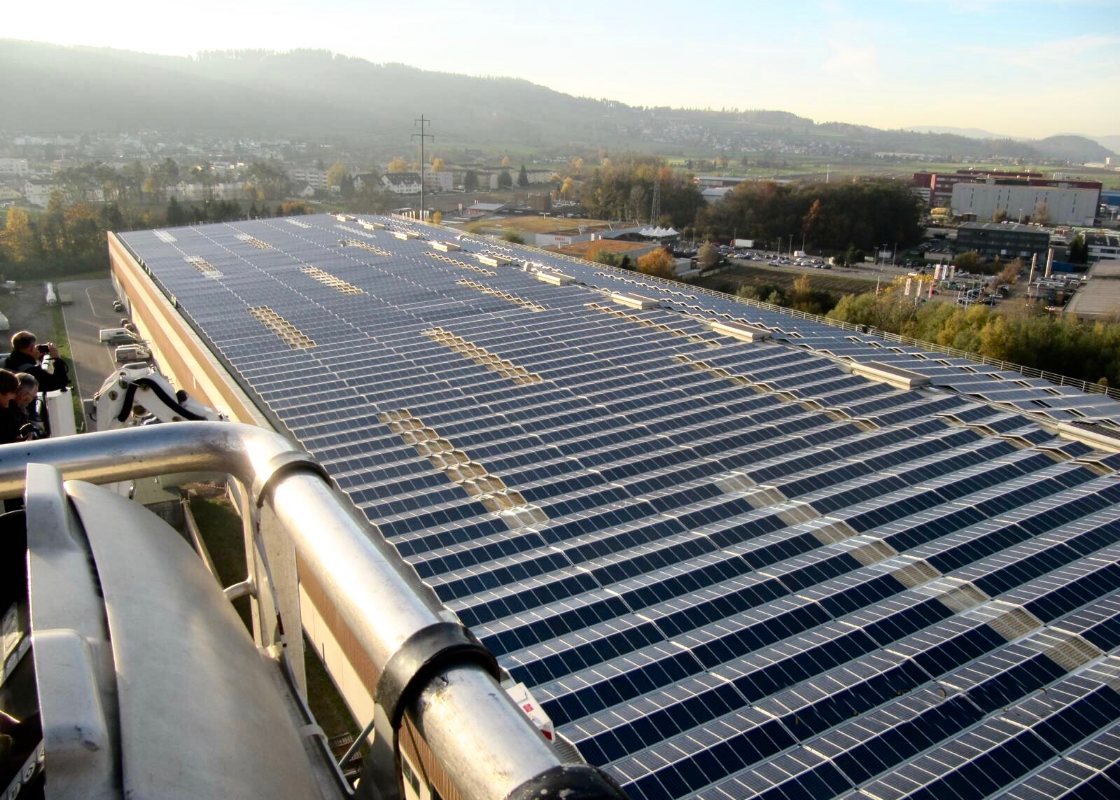
Our German and Dutch sites already buy green electricity. Since June 2026 a solar roof of around 9,000 square metres supplies the Letmathe plant directly; Solingen and Nürtingen are next.
Outside Europe we sign green power contracts where the local market allows it, so that every site runs on renewable electricity by 2028.
Heat pumps and waste-heat recovery replace gas burners in the Letmathe and Solingen plants step by step. The room-temperature conversion coating developed by HÜLSBERG shows the same idea at our customers: a bath that does not need heating saves energy every day.
Process heat is the largest source of our own emissions. Each plant has an energy team that looks for savings in its own processes – from insulation and steam traps to the drying times of our products.
“The cheapest tonne of CO₂ is the one we never emit. That is why we start with the heat in our own plants.”
Most of our footprint sits in what we buy. We work with suppliers on raw materials with a lower footprint, including recycled and bio-based oils for LENNOL products, and take used metalworking fluids back in MEINHARDT LOOP.
Regional production in Europe, China and the USA keeps transport routes short.